


Ancient Colonnade Asset Kit
Overview
My goal was to create a modular and optimized Asset Kit for game engines. I focused on creating a photorealistic look, which included decay and erosion, while maintaining maximum in-engine efficiency.


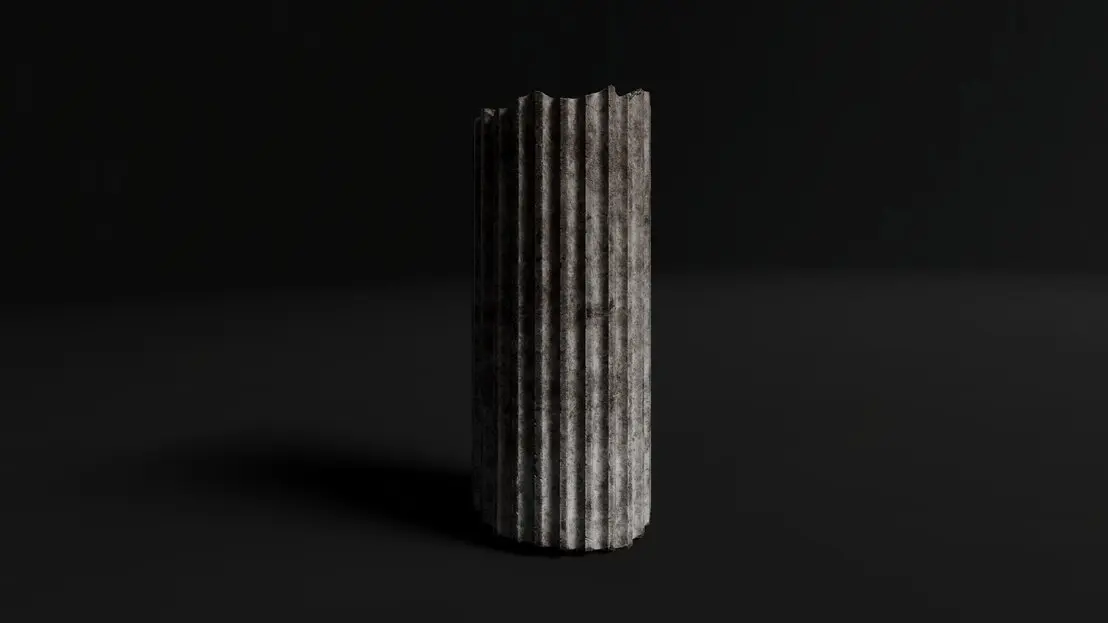

Modeling Workflow: Optimization and Low-Poly
- Low-Poly Modeling in Maya: I created the base geometry of all components (columns, arches, architraves, pedestals) in Maya. The primary goal was maximum optimization with the lowest possible polygon count.
- Details Handled by Normal Map: To maintain a high-detail look without the geometric load, fine details like the fluting of the columns, porosity, and subtle stone cracks were simulated entirely through the Normal Maps generated during the texturing phase.
- Topology: I ensured clean topology, concentrating geometry only where strictly necessary (arch curves and broken edges) to prevent shading issues and maximize rendering efficiency.
- Modularity and Scale: All assets were modeled and precisely aligned with the grid for perfect snapping and reusability, facilitating rapid and coherent Level Design.

Texturing Workflow:
- Baking and Detail Projection: I performed the Baking of Essential Maps. The Normal Map was crucial for projecting the details of the fluting and surface chipping.
- Base Material and Variation: I developed a base material of marble, using Generators and Fill Layers to introduce color variations in the Albedo, simulating the different tones due to aging and mineral composition.
- Decay: I applied Smart Masks and Generators to simulate:
- Dirt and Dust Accumulation in crevices, using Ambient Occlusion data.
- Edge Wear to highlight areas most exposed to erosion.
- Roughness Mapping: Particular attention was given to the Roughness map to define light interaction: eroded and dry areas are rendered very rough (matte), while areas of dirt or moisture accumulation appear smoother and more reflective.
